Thursday, October 11, 2012

Honoring The Mandate of Eden - Genesis 2012

Jewish tradition fundamentally views human beings as the crown jewel of all creation.  As we read this week in Parashat Bereishit, God separated human beings from animals by giving us the ability not just to reason, and speak, but also to dream and imagine. From the dawn of civilization, we have possessed the power to create art to express our dreams, theories to test our minds and philosophies to challenge our souls. As our civilization and technology progressed, our imagination and artistic ability have kept pace.

Abraham Joshua Heschel, a philosopher and civil rights advocate, believed deeply in the ability and power of humanity to affect change in our world. However, he writes: “Our concern is not how to worship in the catacombs, but how to remain human in the skyscrapers.”  Heschel asserts that science may enable humankind to reach new heights, even to reach the moon, but these advances also run the risk of alienating us from others and from ourselves.

The daily headlines from around the globe of unbridled hatred, murder, greed, and abused trust from communal leaders give the impression that our world is unraveling, knot by knot. We, as human beings, may have come quite far in the field of science, but human civilization, it can be argued, has lagged behind in the realm of spiritual and ethical development.

How can it be that we have become so advanced technologically, yet remain cavemen in a quest for ethical fire?

The challenges facing contemporary society are not new. From the moment God invests Adam and Eve with their mandate to rule over the natural world, we learn that humanity’s moral and ethical trajectory is uncertain.

In Genesis 1:26 “God says: ‘Na’aseh Adam Betzalmaynu Keedmootaynu V’yirdu … Al Ha’aretz,’ “Let’s make man in the divine image ...  And humanity (“V’yirdu”) will rule over the earth and all wildlife.”  The potential for temptation and internal conflicts of interests are intimated in the directive itself, in the very word indicating the command for leadership, namely “V’yirdu”. Every Hebrew word has a three letter root, yet this fascinating word, “V’yirdu” could be derived from two different sources, either Resh, Daled, Hay, which means to dominate, or Yod, Resh, Daled, which means to go down.

This puzzling textual anomaly catches the eye of Rashi, our greatest Torah scholar.  He comments: “If mankind is worthy, then he will dominate over the beasts. If humanity is not worthy, then they will sink lower than the beasts, and the animal kingdom will rule over them.” Rashi’s insightfully shows how this one word reveals the slippery slope on which humanity finds itself not only in Gan Eden, but throughout time.

In light of these enormous, timeless challenges, what can we do today to fulfill God’s mandate for humankind?

There is no one magic solution to the questions we pose today.  In the book, There Is No Messiah … And You’re It, Rabbi Robert N. Levine contends that “The real world is a messy, complicated place, where there are many hard questions, no easy answers, and lots of work to do.  But inside all of us is the capacity to live up to the potential given to us as human beings created in God’s image.”

Embracing a life imbued with kedusha is the first step. Kedusha, in my opinion, means more than just being "holy"; it challenges us to transcend our instincts. “Kedushim Teheeyoo!”  The Torah implores us to be more than we are; to think beyond our needs; to care about the poor, the orphan, and the widow; and even to love our neighbor across the street as much as the stranger we have never met. Kedusha enables us to honor the mandate of Eden.
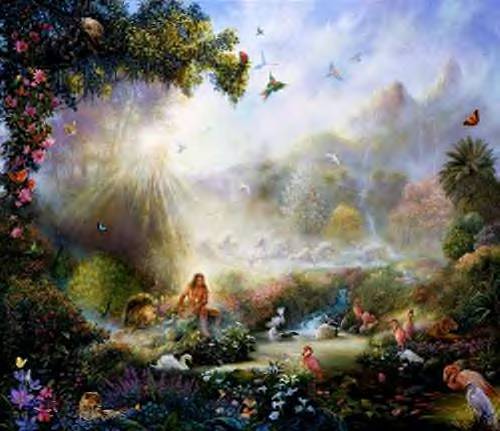
By striving for kedusha, we imagine a world where honesty, integrity, justice, and freedom can take root and blossom. By living a life of kedusha, we create meaning in our lives and those around us. Ultimately, kedusha links us to Gan Eden and represents the key to humanity's returning there one day.


Shabbat Shalom!

Sunday, October 7, 2012

Guess Who's Coming to Dinner


One of the special rituals of Sukkot is "Ushpizin", which means "guests" in Aramaic, when we welcome the spirit of our ancestors to the Sukkah. We invite Abraham, Isaac, Jacob, Joseph, Moses, Aaron and David to join us, along with, in my opinion, their spouses and families. 

One interpretation for this ritual is that by ritually inviting our spiritual heroes to the Sukkah, we will be more motivated to invite flesh and blood guests to celebrate with us. The ritual creates momentum in our lives.

This year United Synagogue invited 100 "Lone Soldiers" to the Sukkah at the Fuchsberg Center in Jerusalem. Unlike Israeli-born soldiers, Lone Soldiers, most of whom have made aliyah, have no family in Israel to visit or rely on during their military service.

Thanks to the generosity of Jack and Ana Berger of Chicago, over 100 of Israel's Lone Soldiers enjoyed delicious Sukkot meals together. Two weeks earlier, over 100 Lone Soldiers shared Rosh Hashanah meals that were generously sponsored by Scott and Andrea Bernstein of Syosset, NY. 

I want to share this description of the Rosh Hashanah meals by Meira Weinstein Flaster and Josh Flaster of TheCenter for Lone Soldiers in Memory of Michael Levin z"l:

The group was fun, dynamic and diverse - 3 religious Brazilian Lone Soldiers from Rio de Janeiro - (one in Givati, one in Golani, one in Tzanchanim), 2 brothers from Raleigh N. Carolina (in intelligence and computer-related roles), 3 Russians in combat and combat support roles, about a half dozen Brits serving in combat units, 1 Australian in the IDF's Hebrew course at Mikve Alon, a few Israeli lone soldiers, who were once part of the Haredi world (and are serving in the army...so there families have left them) and a large group of US and Canadian-born lone soldiers.

The tables were arranged first in rows, and then moved into two large squares at the soldiers' request - to allow them to see and interact best with one another. Hebrew, English, Russian and Portuguese-speaking soldiers co-existed quite nicely - with army slang and the experiences and advice and insider's tricks for adjusting to life inside and outside of the army being the main themes of conversation.

All of the soldiers were greatly appreciative, and stuck around the Fuchsberg lobby for an additional hour after the 3 hour long meal ended.

Many of the lone soldiers who came to these meals had no options or invites for the holiday. They greatly appreciated the meals, and inquired about staying on Shabbatot at Fuchsberg as well.

What I find deeply moving is that the Fuchsberg Center and our larger community took care of these brave souls, who take care of the Jewish people 365 days a year. In addition, thanks to the generosity of the Bernstein's and Berger's, these Lone Soldiers were neither alone nor lonely for the haggim.  

https://origin.ih.constantcontact.com/fs016/1102697684929/img/555.jpgSince 2009, the Fuchsberg Center and USCJ's Israel Committee have collaborated with the Lone Soldier Center in Memory of Michael Levin. Michael was a Philadelphia native who came to Israel with USY, Camp Ramah and Nativ before making aliyah. He was killed in the Second Lebanon War in 2006 at the age of 21. 

During the year Nefesh B'Nefesh also runs excellent programs and offers much needed services to Lone Soldiers. Equally important, they are building an infrastructure of support for young adults who make Aliya and who will serving in the IDF.

I want to recognize the efforts of Rabbi Paul and Nina Freedman who serve as United Synagogue's official liaison for these initiatives. Their sons, Chashi, Benny and Giddy, were all Lone Soldiers before their parents made Aliya, so the Freedman's know first-hand how much this support means to the soldiers and their families. They are tireless champions of Israel and the Lone Soldiers.


This year "Ushpizin" had more meaning than ever because these soldiers did not need to guess where they would have a festive holiday meal. I imagine that at the Fuchsberg Center's Sukkah our ancestors were watching joyfully as they watched these Lone Soldiers celebrate. 

What a way to enter the new year!

Sunday, September 30, 2012

Inspiration is a Two Way Street


Over the next week we will welcome back the lulav and etrog to play a central role in our spiritual lives during Succot. Part of their allure is figuring out the meaning of this commandment and the four species of this ritual package - the palm, myrtle, willow and citron. Are they symbols of the harvest? Reminders of Eden? Tools for repentance?

The rabbis in the Talmud offer various interpretations about the symbolism of the lulav. One midrash explains that the four species represent body parts comprising a person in service of God. Others understand the lulav's components as different personality types found in a kehilla, a sacred community. 

That there are four components of the lulav brought together is significant. The number four reminds me of the four corners of the earth that we recall when we gather our tzitzit before reciting the Shema. We pray every day that Jews from every corner of the earth be united and reunited one day soon in the land of Israel. The gathering of our tzitzit is a spiritual symbolic microcosm of the in-gathering of the Jewish people.

While this prayer sets up a beautiful aspiration, our current reality does not feel so inspirational.

In his latest book, The Promise of Israel, Rabbi Daniel Gordis explores the increasingly distant relationship between Israel and diaspora Jews. While the ongoing conflict with the Palestinians is part of this divide, he believes that a more important reason is at play, namely that American Jews don't feel that they need Israel any more. Arguing that nothing could be farther from the truth, Gordis writes: "What Israel has done is to change the existential condition of Jews everywhere, even in the United States. Without the state of Israel, the self-confidence and sense of belonging that American Jews now take for granted would quickly disappear."

I agree with many of Rabbi Gordis' ideas, but he misses the point that inspiration is a two way street. The light does not just come from Zion to us in the USA; we, too, can be a light unto Israel.

The latest example of this phenomenon is Aly Raisman, from my hometown of Needham, MA. Aly won the gold medal at the London Olympics in the individual floor gymnastics. I want to share an open letter to Aly from an Israeli Soldier posted on Facebook on August 10, 2012:

Dear Aly,

I want to tell you about how you became the hero of a gym full of Israeli soldiers. The same Israeli soldiers who have to deal with Iran's nuclear threat to the Jewish state. The same ones who serve two-to-three years of their lives, because we have to; because there's no one else that would do it besides us, because our neighborhood sucks, and when the leadership next door in Syria massacres their own people, there's no way we would let them lay hands on our kids, as foreign dictators have done for thousands of years.

You picked a song for your floor routine in the Olympics that every Jewish kid knows, whether their families came from the shtetls of Eastern Europe, the Asian steppes of Azerbaijan, the mountains of Morocco or the Kibbutzim of northern Israel. It's that song that drew almost everyone at the Israeli army base gym to the TV as soon as the report about you came on the news this morning. After showing your floor exercise to Hava Nagila, the announcer told about your gold medal with unmasked pride, and of your decision to dedicate it to the Israeli athletes who were killed in the Munich Olympics in 1972.

There were some tough people at that gym, Aly. Men and Women, Battalion Commanders from Intelligence, Captains from the navy, Lieutenants from the Armored Corps and more. You probably understand that words like 'bravery' and 'heroism' carry a lot of weight coming from them, as does a standing ovation (even from the people doing ab exercises.) There was nothing apologetic about what you did. For so long we've had to apologize for who we are: for how we dress, for our beliefs, for the way we look. It seems like the International Olympic Committee wanted to keep that tradition. Quiet, Jews. Keep your tragedy on the sidelines. Don't disturb our party.

They didn't count on an 18 year-old girl in a leotard.

There wasn’t one person at the gym who didn’t know what it was like to give back to our people, not one who didn’t know what happened to the good people who died in 1972, not one who didn’t feel personally insulted by their complete neglect in the London Olympics, the 40 year anniversary of their deaths, and not one who didn’t connect with your graceful tribute in their honor.

Thank you for standing up against an injustice that was done to our people. As I was walking back to my machine at the gym, I caught one of the officers give a long salute to your image on television. I think that says it all.

Sincerely, Dan Yagudin, Officer, Israeli Defense Force

By choosing to compete to "Hava Nagila", Aly taught Israel and Jewry worldwide that diaspora Jews can be partners in healing past wounds, and, equally important, generating new forms of Jewish pride.


By living as a Jew with her head held high, Aly brought together Jews from all over the globe with a sense of purpose and connection similar to the four species of the lulav.

This year let's embrace the idea that the lulav and etrog can also represent Jews from the four corners of the world. Like the different components of the lulav, each one of us has a special role to play and something unique to contribute.  

By bringing the four species of the lulav together, we express our hope for unity, shared purpose and peace for Israel and all of humanity. Equally important, we are reminded that inspiration can come from many places.

Tuesday, August 21, 2012

Jewish Connection Forged in the Desert Sun

Just a few weeks ago we sat on the floor on Tisha B'av and read Eicha, the book of Lamentations. The ninth of Av conjures memory of loss, despair and longing. Loss of our land and holy places. Despair for our future. Longing for a new beginning, a second chance.

Chanting this sacred, depressing scroll, we repeat the word Eicha several times and can feel all of the pain associated with it. Eicha actually means "how", and in the context of Lamentations it broadcasts  weighty questions for us to consider: How did this tragedy happen? How did what was so complete shatter into pieces? How did our people lose its way?

This year, just short four days after reading Eicha, I had the privilege of leading a service on top of Masada in the one of world's oldest synagogues. As part of United Synagogue's Family Israel Experience, our group celebrated the b'nai mitzvah of six youth during Shacharit (morning services). Surrounded by family and a bus of new friends, Jonah, Ryan, Allison, Jamie, Andrew and Josh each had a role in the service to mark this important milestone. That day the sun served as spotlight as these youth embraced a new understanding of and commitment to Judaism.


For some reason during the service, Eicha somehow popped into the forefront of my mind. While the distance between the disconsolate imagery of Lamentations and our joyous ceremony were light years apart, a thread seemed to connect these two experiences. At that moment, I realized that these youth and our group celebrating Jewish life in 2012 was answering a question not mentioned in Eicha. How do we move forward towards a strong future as a people?

We intentionally craft this Israel program to be meaningful, memorable and fun. These three pillars of our mission may actually constitute how we can ignite the flame of excitement within our youth - and ourselves - that leads to an increased connection and engagement with Torah, Israel and Judaism.

Under the hot morning sun, we discussed how each of us can make our own commitment to Judaism even stronger. Ultimately we encouraged everyone to remember their feeling at that moment and to take it home with them.


Celebrating our youth's coming of age in the modern State of Israel, we could see the future in front of our eyes, and it felt bright and inspiring. Oh, how their enthusiasm and sense of purpose radiated that morning as strongly as the desert sun!

Monday, July 16, 2012

Engaging the Next Generation Via Rock Talk

Changing patterns in volunteer and affiliation patterns have amounted to a gigantic wake-up call for the established Jewish community. What has emerged is a dynamic discussion within kehillot (congregations) and many non-profits about how to engage the next generation.

Facebook, Twitter and Web 2.0 have been hailed as the magic pill. Yet we have found that social networking alone merely constitutes tactics for building community, rather than a comprehensive strategy to meet this goal. Furthermore, while many organizations and kehillot have established online platforms, few have mastered how to maximize their impact as part of an integrated engagement initiative.

I recently wrote about Wilfred Drath's theories about "relational dialogue" as the ideal model for leadership in our times. Relational dialogue is akin to community organizing, as it generates ongoing opportunities for meaning-making in communities of practice.

As the book of Numbers winds down, we are sadly reminded that Moses will not lead the people across the Jordan River. Drath's ideas about leadership models, I believe, can help us understand why Moses is punished for not speaking to the rock. His ideas actually complement  those of Rabbi Naftali Tzvi Yehuda Berlin, "The Netziv", who was the last Rosh Yeshiva of Volozhin in the late 1800's.

As you may recall, as soon as the Israelites leeave Egypt they need water. In the first year of their journey, Moses is told to hit the rock and water comes forth. 

The second time the issue of water arises, God commands Moses to speak to the rock. This new directive, 39 years after the first one, is somewhat perplexing. First and foremost, the thought of speaking to a rock seems strange. Even in 2012 it feels funny talking to Siri on our iPhones, let alone a rock without voice recognition software. More to the point, if hitting the rock worked before, then why does God change course now? 

To understand the new directive, we have to grasp the mindset of those who would witness the miracle. The generation that left Egypt were accustomed to strong leaders (in Drath's "Personal Dominance" model), such as Pharaoh and Moses, who used force as a mechanism to maintain order. Hitting the rock is an act of force to which the recently freed slaves could appreciate.

Thirty nine years later the next generation, born into freedom, God realizes, needs a different experience. God tells Moses to speak to the rock to symbolically indicate that these people are ready for a new leadership and communal paradigm. The next generation are prepared to take part in the conversation about constructing a new society in the Promised Land. Their thirst would be quenched by deciding their own destiny.

Moses' error in judgment is not realizing that the "rock talk" is about showcasing a new model of leadership. Simply put, he doesn't realize that the medium is the message.

We face similar challenges today. There are new ways of reaching the next generation. When we sit face to face either online or in person, it is vital that we make room for the young - and young at heart - to contribute to a communal dialogue about our shared future. By convening our own "rock talk", we invite all stakeholders to play a role in actualizing a vision we create together.

Monday, July 9, 2012

The Key to the Kehilla of the Future


The term "leadership" is used so liberally today, it can be challenging to pin down what it means and how best to make it happen.

A provocative exploration of leadership comes from Wilfred Drath in his book, The Deep Blue Sea. Dissecting leadership to its basic elements, he identifies leaders' core tasks as "setting direction" (create a vision), "creating commitment" (generate a coalition to actualize the vision) and "facing adaptive challenge" (use a shared mission to deal with change).

In an attempt to uncover the nuances of leadership, Drath presents three different models:
  1. Personal Dominance – Leadership happens when a leader acts. It is a personal endowment of leaders.
  2. Interpersonal Influence – Leadership happens when a person influences other more than he or she is influenced. This is a process of negotiating social influence.
  3. Relational Dialogue – Leadership happens when people make sense together of shared work.
He believes that the first two models are limited and that Relational Dialogue is best equipped to meet the challenges of our time.

Looking at these models through the prism of  history, we can understand better. In the context of Jewish history, a leader who exudes "Personal Dominance" can be Moses or King David. A model of "Interpersonal Influence" seems to describe the rabbis of the Talmud who achieve success by having their opinions accepted by the majority.

What about Relational Dialogue? Where do we see this approach in Jewish history? 

While I am not sure that we have seen this model in the past, it is happening all around us today. For instance, Jewish learning experiences built around chavruta (paired learning) welcome and encourage dialogue. Independent minyanim also ask participants not only to define their shared values, but also to take an active role.

Furthermore, Beth Am Synagogue's (in Baltimore) "613+ Shabbat Dinners" and The Riverway Project of Temple Israel in Boston are using dialogue to create community.
  
Similar to community organizing, this model constitutes meaning-making in communities of practice. The fundamental tools here are listening and dialogue. Ultimately this approach encourages participants to embrace communal responsibility so that a shared narrative can be actualized and experienced by others.

Our Sulam Leadership team at United Synagogue has made facilitated dialogue a pillar in all of our offerings because of the impact it has on everyone involved.

In an age of change, I believe that kehillot can benefit deeply from adopting or integrating elements of the Relational Dialogue model. Beyond introductions and ice breakers, this approach can be used to generate conversations about our values and to assess how well we are achieving the community's vision.

One of the pillars of contemporary adult learning theory is that we learn best when we actively participate in conversations that impact our lives. To borrow a phrase from the Khan Academy,  Relational Dialogue can transform a rabbi and educator "from the sage on the stage to the guide on the side."

Relational Dialogue holds great promise for Jewish leaders to energize their kehillot today, and it may just hold the key to unlocking the kehilla of the future. 

Wednesday, June 20, 2012

The Power of Constructive Disruption
In the limelight for just a fleeting moment, Korah disrupts the Biblical status quo.  One of the most complicated characters in the Torah, Korah's legacy is equally complex. 

Remembered mainly as the power–hungry rebel swallowed by the earth for challenging Moses and Aaron's authority, Korah is also depicted by the Midrash as a wealthy and successful former minister in Pharaoh's court and the patriarch of his Levitical family clan.

Korah is not an "outsider" in the Israelite camp; rather he has "elite access". According to the Midrash, Korah is a member of the Kohatite–Levite family, who are entrusted with the special responsibility of carrying the ark of the covenant whenever the Israelite camp moved.

We know from earlier in the book of Numbers that the Torah recognizes that this responsibility comes with certain caveats. With careful stipulations, the Levites are instructed not to look at the holy vessels they carry. Some commentators hold that this rule was enacted out of fear that the vessels may lose their sanctity in the eyes of their be-holders. The Torah also understands that it is human nature; those who handle holy vessels — or anything valuable for that matter — may be tempted to misuse them for their own purposes. It reminds me of Dorothy peeking behind the curtain.

This week's Torah portion affirms that the eponymous character may have gotten too close to the spiritual seat of power. From his proximity to the symbol of God's brit, covenant, with the Jewish people, Korah develops illusions of grandeur.

At the beginning of this week's portion, Korah confronts Moses: "You have gone too far! For all of the community are holy, all of them, and the Lord is in their midst. Why did you raise yourself above the Lord's congregation?" (Numbers 16:3) Korah gives the impression of promoting an egalitarian platform for the Jewish people. There is a consensus among traditional and modern commentators that Korah's true motivations lie in removing Moses and Aaron from power and ruling the Israelite community as he sees fit without the yoke of God's Torah.

One may try to simplify this episode to Moses feeling threatened by others undertaking positions of power and leadership in the Israelite camp. But this interpretation contrasts Moses' attempts to share leadership whenever possible. Moses appoints many judges, empowers the tribal leadership during the reconnaissance of Canaan, and establishes the council of the seventy elders. Moreover, Moses is delighted when Eldad and Medad, two random Israelites, begin prophesizing on their own. In Moses' eyes, Eldad and Medad are examples to be raised up, not silenced. Eldad, Medad, Joshua and Elazar the priest are all part of Moses' leadership succession plan, albeit without a timeline. 

After the rebellion has been contained, God instructs Moses to have Korah's fire pans melted into a covering for the altar. These metal coverings would serve "le'ot leev'nay yisrael," "as a warning for the people of Israel" (Exodus 17:3). The word "ot" literally means "a sign," and from the context it is easy to see this altar covering as a symbol of caution for future rebels.

The placement of this warning, however, strikes me as bizarre. One might expect that such a warning would be outside of the Tabernacle and away from the altar, not connected to it.

We find a subtle clue as to the reason for the interconnected placement of this warning and its multifaceted meaning in the commentary of Ibn Ezra, a twelfth–century Spanish sage. Explaining the word "ot," he oddly offers two explanations; the warning is "a memorial and a sign."
The ambivalence about his character is expressed in the "memorial and sign" created to remember the rebellion. As a memorial, the hammered sheets warn the people and their spiritual leaders — the Levites, the priests and Moses — that when serving God their intentions need to be transparent and sincere. As a sign, the covering on the altar itself subtly encourages all Jews not to follow their leaders blindly if they seem to have strayed from the path. When questions are guileless and "leshem shamayim," for the sake of heaven, public debate can become a sacred enterprise, unite a community, and raise us to new spiritual heights. 

Korah's legacy cannot just be reduced to a cautionary tale. This memorial elevates the conversation that just took place, almost honoring it. While Korah was misguided in his talking points and disrespectful in his approach, his disruption fostered a vital communal conversation about vision and purpose within the Israelite camp.

In the midst of his own rebellion, Korah does not grasp the very essence of what makes the Jewish people an "am kodesh," a holy nation. As the "chosen people," we are not bequeathed a sense of entitlement; rather we are obligated to create opportunities for God's presence to be felt and experienced in this world. Not only are we encouraged to question authority in certain situations, but we are expected to listen to those voices that are different from our own.

The Korah memorial reminds us about not only the danger of self–interested defiance of divine authority, but also our eternal obligation to challenge our leaders if they stray from our community's and society's best interests. The ultimate irony is that Korah's complex legacy inspires us to be rebels with a cause of constructive disruption.